Trading & Swapping: Headache Or Gains?

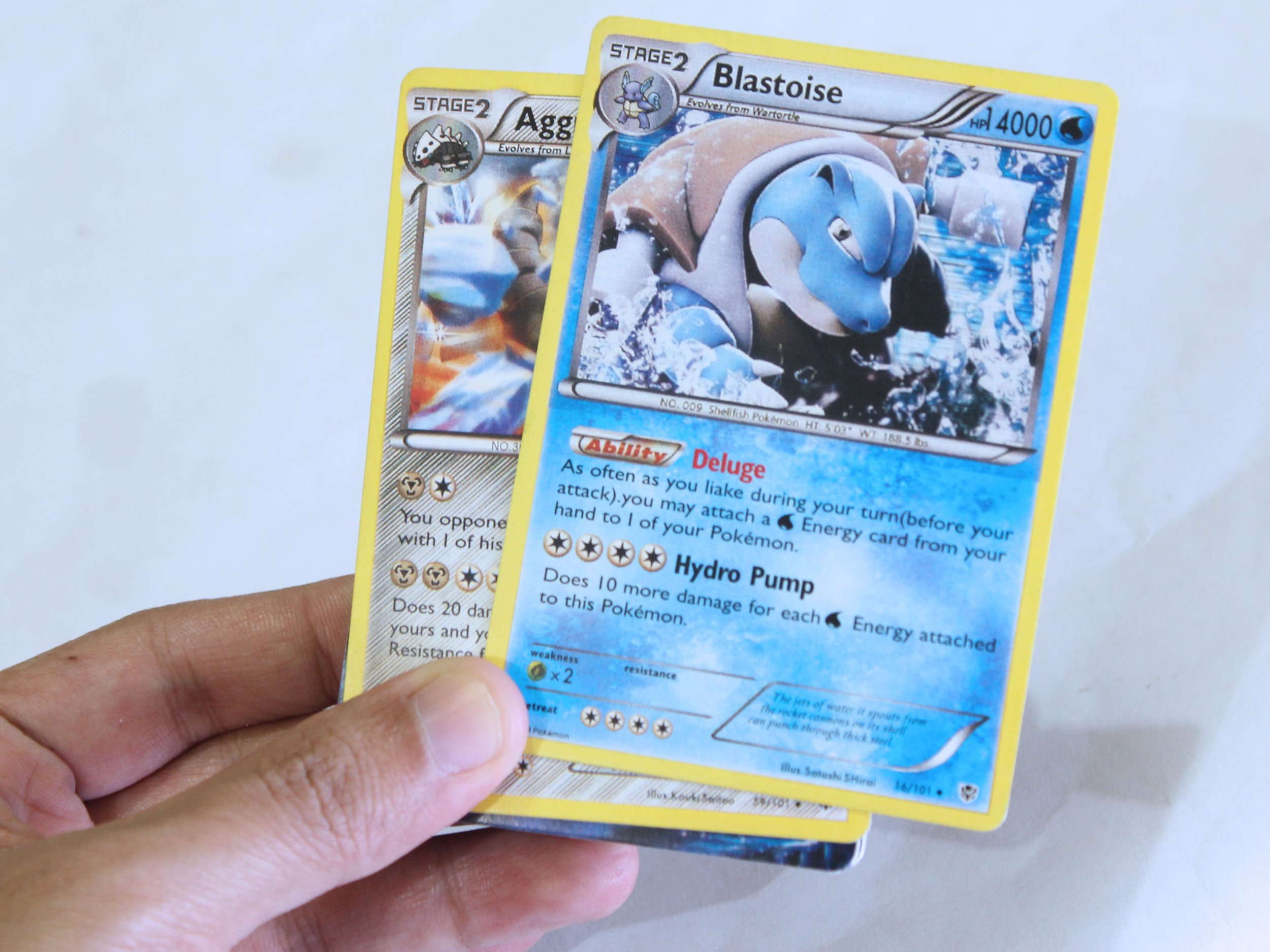
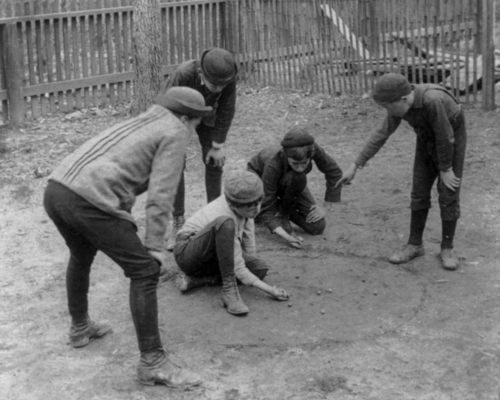
At present in Adventure Playground, I work Pokémon is in a popular cycle. Pokémon, like any trading or gaming mechanism comes with its fair share of trials and tribulations and the question does on occasion get raised, "should it be banned"? From a Playwork perspective we do not have the luxury of being subjective about these sorts of things and we need to think about the bigger picture. In the case of cards and trading, the cyclical nature of this play alone (the fact that it comes and goes and is evident in all play settings) tells us two things:

1: There is most likely an evolutionary and developmental function to this play.

2: Banning it only ensures the rapid coming about of the "next thing" to cause these issues groundhog day style with no lessons learnt.

So, what could be the function of this sort of play?

First of all, in addition to the occasional issues that arise, I observe frequently: communication; negotiation; compromise; attribution of value; friendships and social interactions arising well outside of regular peer groups; patience; the development of resilience and maybe slightly more controversial, occurrences of manageable conflict. Conflict gets a bad wrap in the "care" industry and of course, there are many types of conflict we mitigate and/or seek to avoid altogether. However, some conflict, in a play context, is absolutely critical to laying the foundations for conflict management with real, harder hitting issues that will arise when the children are older.

Thus, despite the many obvious, and more easily managed functions of this play, it is possible that these debatable and negotiated disputes are one of the most important functions to set the children up for success in the future. The small catch that can make these things hard to watch and manage from the outside is that it cannot feel fake or tokenistic to the children. They need to "care" enough to have genuine emotional connection to the play, without that emotional connection being strong enough that they are moping over the card they lost at the age of 8 when they are 16. This is the value of trinkets, collectables and trends that children are drawn to and collect like bower birds but come and go in phases.

Another trend is that of cooling off periods for trades. This in my personal experience has no positive outcomes for the play and actually some significant negative ones. For example, children are free to be flippant with their trades knowing they can always change their mind which in reality causes more conflict between traders. The advice here would be to instill the idea in the children to be very mindful of the trades they make as they will stick. This, I am sure as adults you can appreciate, is a lesson better learnt over a trading card or similar rather than many scenarios when the option to "take back" a decision is not available later in the children's formative years,

In short, we can ban Pokémon cards (or the trend of the time) or take a more punitive approach to policing them. However, this will neither solve the play drive to engage, nor impart the very real and functional skills to the children this play drive was meant to do. We can however take a responsible approach to facilitate these play opportunities, give the time and space for them to play out, and be engaged and present if additional support is required.

Angus Gorrie
Playworkers In Schools: A musing on potential

Playworkers In Schools: A musing on potential

Relieving burden from teachers, creating opportunity for children…


Picture: A scene from Ascot State School’s Playground, a school that has invested in applying a Playwork approach to how they view, and manage their Prep to Grade 2 space.

Picture: A scene from Ascot State School’s Playground, a school that has invested in applying a Playwork approach to how they view, and manage their Prep to Grade 2 space.

The Issue:

Schools are a place of learning, no doubt, but by default they are also a place of children, possibly in the largest regular concentration of both time and numbers they exist in our (Western) society. This simple fact creates challenges for school institutions as despite being primarily a place of education and learning, from a developmental and evolutionary perspective we know that there are many other factors critical to the physical and psychological moulding of a successful human being. Now it is not that teachers are naive to this fact. On the contrary, most teachers we, as The Outsiders, have worked with exclaim immense frustration at the juxtaposition of what they “know” is important for the children, and what the increasing burdens of curriculum and societal expectations demand in regard to how they allocate their time to the children, and as a result how the children spend their time. Sadly, among other issues, this frustration is one of the contributing factors to the acknowledged rise of dissatisfaction within the teaching industry at present.

Often, as a result of the aforementioned burdens on time the first casualty is play. This is not really surprising, as not only is play easy to trivialise, but arguably, it has not always been a school’s responsibility to afford children quality play. We do not have to gaze back far to see a time where school days were shorter, holidays were longer and far less pressure of an extracurricular nature existed. According to Gray (2011), in the United States, a combination of the school day and the school year increasing at the same time as recess or “play time” decreasing correlates with other Western countries. Armitage (2001), accounts that since 1971, play time in English and Welsh schools has nearly halved and Evans (2003) states that in Australia, a substantial decrease in the length of recess time, much of which is taken up by mandatory eating time, is typical.

So, what is the big deal? What are the ramifications of a decrease in children’s self-directed and self-motivated play? Some of histories great minds give a wealth of nice quotable sentiments pertaining to the value of play including:

“The creation of something new is not accomplished by the intellect but by the play instinct.” – Carl Jung

“Play is the work of the child.” – Maria Montessori

“Almost all creativity involves purposeful play.” – Abraham Maslow

"Play is the highest form of research". - Albert Einstein

In addition to these inspiring sentiments, evidence suggests that in the absence of freely directed and motivated play is born many of the ailments that seem to be rapidly on the increase, from a lack of resilience and growth mindset, to an increase in depression, anxiety, and general apathy towards to responsibility (Gorrie, 2021). From these perspectives, it is reasonable to conclude that although the primary focus of the institution of school may not be play, play should, with a view of the holistic development of the whole child, at least be more than a secondary consideration.

Picture: Viewing a potential play space from a Playwork perspective, like the team at Eagleby South SS are doing in this picture goes a lot deeper than choosing a playground from a catalogue. Space, feel, nooks and crannies, everything gets consideration and all for good reason.

Picture: Viewing a potential play space from a Playwork perspective, like the team at Eagleby South SS are doing in this picture goes a lot deeper than choosing a playground from a catalogue. Space, feel, nooks and crannies, everything gets consideration and all for good reason.

A Solution:

The solution in suggestion is not overly complicated and is one with precedent in countries other than Australia. This suggestion is to introduce Playworkers as a recognised and valued position within a school’s staffing dynamic. Playwork, as a profession revolves around supporting all children and young people in the creation of a space in which they can play. As simplistic as this may first sound, the ability to successfully achieve this, let alone in a school wide capacity is dependent on a wealth of knowledge and experience on children’s physical and cognitive development, play and play types, the nuances of physical space and what opportunities space can afford and complex understanding of risk benefit analysis just to name a few elements of a Playworker’s repertoire. In a school setting, the scope of a Playworkers lens would extend far beyond the range of the fixed metal jungle gyms and designated play/recess times to add overall benefit to the ludic ecology of the school site.

Picture: The play leadership team from Berrinba East State School engage with Playworkers from The Outsiders Play Advocates. Although Play development training and support like what we offer exists, nothing could surpass a dedicated on site Playworker.

Picture: The play leadership team from Berrinba East State School engage with Playworkers from The Outsiders Play Advocates. Although Play development training and support like what we offer exists, nothing could surpass a dedicated on site Playworker.

The addition of a Playworker, or Playworkers into a school’s staffing dynamic would ameliorate two major issues, but no doubt have a trickledown effect elsewhere. First and foremost, it would practically and tangibly announce the belief in the value of play and its place within a school context. When something is obviously valued, it can be taken seriously and ceases to exist in the periphery of culture and action. This in turn is the catalyst for respect… Respect for the adults who do value play and seek to champion it, and respect for the children who already innately seek out these experiences. Secondly, it removes one more burden from teachers and their already overloaded list of expectations. A common challenge exclaimed to us as play advocates when working within school faculties is that committing to play and a change of culture is just one more thing most classroom teachers do not have time for. It is sad, but an understandable sentiment when in most school settings supervision of play is rarely seen as facilitation, affording opportunity or meeting social and emotional needs but rather as a timetabled chore that happens instead of a break and most commonly referred to as a “duty”. What a boon for teachers to have staff dedicated to this time, able to communicate in articulate ways to going ons, the benefits occurring for the children and plans to improve these. Welcome to the mindset of our hypothetical Playworkers.

So how could this suggestion and addition to staff be achieved? In the absence of funds forthcoming from the department of education to support such a worthy cause, or at least not until a successful evidence base was established, it seems not without precedent that the school P&C, or P&F could consider this opportunity. By definition, P&Cs among other things, “assist the teaching staff in establishment of school policy and management in all facets of school activity”. Much like the subcommittees within P&Cs that see merit and fund raise for Chaplaincy programs which benefit children and their well being, it does not seem far fetched that an equal consideration could not be directed towards play, the benefits of, and the staff that are the catalyst for its ideal provision. Consider also, the conversations around funding playgrounds, in some cases with dollar values in the 6 digit figure realm that ultimately are fixed equipment, often suiting limited age groups, and with an aesthetic to meet adult agenda. Consider on the contrary, expert well considered advice as to these expenditures aimed at benefiting the most children possible, derived through an understanding of their specific and changing needs in the most variable and dynamic ways. Once again, benefits possible with a Playworker on the team.

Picture (Credit St Mary’s Primary School Rockhampton): The trouble with play is there a lot buzz words. Loose parts play, nature play, risky play… These all fall short without a deep understanding of what play is, what function it has, and how to best facilitate.

Picture (Credit St Mary’s Primary School Rockhampton): The trouble with play is there a lot buzz words. Loose parts play, nature play, risky play… These all fall short without a deep understanding of what play is, what function it has, and how to best facilitate.

One limitation to this plan surmounts others in regard to it becoming a reality. This is simply, due to the current niche application of Playwork within Australia, available and experienced Playworkers are a rare commodity. However, this becomes somewhat of a chicken and egg argument as what the Playwork industry needs is more legitimate professional opportunity to keep the many talented play enthusiasts in the industry practicing their skills. Thus, as bold as a plan like the one described above may seem, it is its implementation that will fuel and maintain the workforce and specialist skills that are required for it to be sustainable. With that in mind this article is aimed to be the sparking of a metaphorical flame, a seed planted that will hopefully take root first as conversation, then maybe as action. If any representatives of P&Cs or similar vested bodies exist out there that would like to discuss what this could look like, how this could work and what the many benefits to your children could be, please do not hesitate to reach out.

Angus Gorrie

Playworker

The Outsiders Play Advocates

Some Playwork Resources

What is Playwork: https://playworkfoundationorg.files.wordpress.com/2016/03/no-14_what_is_playwork.pdf

Guidance On Playwork: https://www.playscotland.org/play/playful-learning/information-on-playwork/

The Playwork Principles: https://www.playwales.org.uk/eng/playworkprinciples


Armitage, M. (2001). The ins and outs of school playground play: Children's use of 'play places". In J. C. Bishop & M. Curtis, Play today in the primary school playground (pp. 37-58). Buckingham: Open University Press.

Gorrie, Angus Ian (2021) "A Curiosity About Links Between Adventure Playgrounds, Loose Parts, Playwork Approach, a State of "Flow" and Children’s Wellbeing," International Journal of Playwork Practice: Vol. 2 : Iss. 1 , Article 1. Available at: https://scholarworks.bgsu.edu/ijpp/vol2/iss1/1

Evans, J. (2003). Changes to (primary) school recess and their effect on children’s physical activity: An Australian perspective. Deacon University.

Gray, P. (2011). The decline of play and the rise of psychopathology in children and adolescents. American Journal of Play, 3(4), 443-463.

The Multifarious Nature of Play

In the over compartmentalised nature of time these days, including children’s time, play has suffered. To make play fit into part of the schedule, there is ever increasing need to justify the need for it, be it physical health, education, or therapy. In other words, an increasing perceived need to apply an adult agenda to it. This is often done with good intentions, sometimes not, but either way it has the potential to limit the actual multifarious nature of this thing called play. Whether or not the intentions in applying an adult agenda to play are good or bad, one thing is for sure and that is that play is becoming increasingly “delivered” to children in an entirely calculated and extrinsic way. As playworkers who ideally uphold the idea that play should be freely chosen, personally directed, and intrinsically motivated this presents somewhat of a problem.

In his later years, psychologist Lev Vygotsky purported the idea of Perezhivanie, a Russian word best translated as “a lived experience”. In simple terms Perezhivanie suggests that learning occurs more easily, or more meaningfully, when there is an emotional connection to the learning, due to the fact that a real experience has been had. In effect a penny drop moment. The only problem with this idea is that most Western interpretations of this to lead to quotes like "children learn more when the experience is a joy"... Now this statement is not wrong, but extremely limited in both understanding of play, and of experiences children are likely to have, and learn from.

Consider this quote by playworker Morgan Leichter-Saxby:

Play gives us the chance to mediate between primary and secondary emotions - to experience anger, disgust, shame, happiness etc within the safety of a play frame we construct and control. This process can be risky emotionally as well as physically, for example when we swap insults with friends, or go through rituals of initiation or goodbye, or face our fears to climb a high platform and look out. As Dr. Spock said, “a child loves his play not because it is easy but because it is hard.” It is important to remember that what makes a particular element of play “hard” may not be visible from the outside”.

This quote paints a quite different and much broader idea of what could constitute a Perezhivanie moment experienced in play. In addition to potentially being a joyful moment, the moment might leave one red faced, flustered, frustrated, challenged or even angry and upset. These additional emotional connections that all children will experience in their play are equally important as the joyous ones and so children need to learn how to manage and deal with and overcome them. The challenge in children realizing these innate lessons however lies in the fact that adults, through their agendas are unlikely to extrinsically facilitate play that results in these sorts of emotions. This, in its essence is precisely why we need to allow play to remain intrinsic, to allow children to retain power over the content and intent of their play. Consider, what very real learning and occurrences of Perezhivanie moments may be squandered if we do not.

While discussing this very topic with playworker Marc Armitage he made the relevant statement… “If play is for anything in particular, the likelihood is that it acts as a mechanism that brings together numerous, sometimes seemingly unconnected, elements into one place at one time, and makes sense of each of them through the connections that are created from them as a whole. That means that when we see play through the lens of just one agenda, we are missing the very point that makes play such a powerful behaviour”. Agendas, especially when singular, are an extremely extrinsic force. Extrinsic agendas often lead to children being told what they should experience, not living the experience, and thus missing the opportunity to experience a Perezhivanie moment. As adults we must trust in the play process, we must remove ego and accept that in play, children will create situations which excite emotions when they are ready to tackle them and in ways they feel they can. This trust can come hard however as, in the words of John Holt:

To trust children, we must first learn to trust ourselves… and most of us were taught as children that we could not be trusted”.

Angus Gorrie


96168000_2954991664547951_3108944478442881024_n.jpg

ON TEASING

As educators, we see it often and it can be a difficult task navigating the complexities of what is right or wrong, healthy or damaging in todays ever changing world.

But when is teasing ok? Is it ever more than ok? Could it actually be of value to our lives and society as a whole?

This article by Dr Peter Gray is an oldie but a goodie. Have a read and let us know your thoughts!

VIEW ARTICLE HERE

61MywOLQWBL._AC_SX522_.jpg


Supporting Resilience

24068369_10160276695540192_1488319184535775284_n.jpg

A scary global trend, particularly in western countries is the severe decline in the resilience of children.

Resilience is the process of adapting well in the face of adversity, trauma, challenges, threats, or significant sources of stress such as family and relationship problems, serious health problems, or behavioural and academic stressors at school. It means “bouncing back” from difficult experiences. Although a playwork approach supports the development of resilience among many other positive social and emotional traits, unless these are supported across the board results can fall short.

Low resilience in children can often be identified when they:

• Often give up too easily

• Lack initiative

• Deal with failure badly

• Blame others when things go wrong

• Want you to solve their problems

• Fear failure or consequences, so use avoidance strategies

• Overtly negative perception to stimulus

• Strong external locus of control

We would like to share some strategies and open-ended questions that have worked to promote resilience while still being able to weigh in as a parent or educator:

1. Nurture Optimism: This seems so obvious, but we often see parents/carers fall into the mood of an upset child. Truth be told I have seen children become infinitely more anxious/distressed because they are mirroring their parent’s reaction. Obviously, children see their parents as a person worth modeling and if that is the default behaviour it becomes the go to. As a person working with children, it is very easy in the case of a meltdown, injury, or irate parent to feel stressed, even angry, but it is very important to remain at face value calm for the children’s sake. This face value effort does translate to real confidence as we master it.

Questions to support: If a child has had an average day, especially caused by another child, instead of deeply delving into the “bad” ask about what might have gone right during the day and if that comes up with naught ask what might be done to ensure a better result tomorrow. Once again, I know this seems simple when laid out like that but, as a well-meaning caregiver or parent it is very hard to remove the desire to dig into the negative.

2. Model Resiliency: When children see obvious anxiety and distress on parents or other adult’s faces when they share their story, they immediately feel irrevocably validated that they were right to be fearful, anxious, or distressed themselves. Now “maybe” they were right to feel this way, at least a little anyway… But often these situations are complex being based more on an unconscious assumption, perception, or even straight-up false information.

Questions to support: In a confident but caring way phrase the possible other perceptions that may have led to a situation. Not only does this help build empathy but also executive function as it demonstrates to the children that there are often more ways to look at a situation than theirs. What you are hoping to achieve here is not necessarily undermining a child’s point of view at all, but rather understanding why someone else was or can be, for lack of a better word, annoying. Sometimes understanding these things alleviates half the worry that surrounds it.

3. Nurture A Growth Mindset: This just refers to not getting bogged down in negativity. Today might have been bad, but tomorrow doesn’t need to be. Reinforce that. This works for the antagonist as well. Reassuring a child that the other person can change can alleviate the hopelessness of believing they will always be subject to whatever the negative behaviour may be.

Questions to support: Remove the negative and focus on what could be done the next day. Maybe even bring the other party into the conversation, what could be done to help them be happier (most bullying/antagonizing behaviour is a result of frustration or anxiety after all). This once again supports empathy and a long-term solution.

4. Help them build their problem-solving toolbox: This is great for conversational reasons and empowerment.

• What would [someone who they see as capable] do?: This could be as “actual” as another playworker or yourself or as random and arbitrary as Wonder Woman or Super Man!

• What has worked before?: Most children have most certainly demonstrated the ability to overcome some challenges thus far so these experiences should help their future interactions.

• Say as many ideas as you can in two minutes, even the silly ones? Lay them on me. Go!: This can make a bit of fun out of an average situation and nurture that supportive light side of the situation.

• How can we break this big problem into little pieces?: Slices are easier to deal with. These everyday strategies have been highly successful in our play spaces and we hope they may help other children expand their emotional capabilities in other arenas.

Angus Gorrie

Lord Of The Flies?

During my time working in a large well resourced loose parts playground I have, both affectionately and not so much heard the space referred to as an environment that incites images from “The Lord Of The Flies”. The novel of this name written by William Golding in 1954 is an interesting one as was written at a time in psychological history where many were seeking to answer important questions about the darkness of people’s subconscious and potential. It is this underlying theme of the novel that always made me feel uneasy by the comparison to our play space, as if made by someone who had actually read the book, it would imply it was only a matter of time until someone got speared or worse!

Some time ago I was listening to a pod cast interview of evolutionary psychologist Dr Peter Gray when the interviewer questioned him about the rather free range approach to learning he purports and, like many before compared such an environment to “The Lord Of Flies”. Gray, promptly and with wit quickly shut such a suggestion down pointing out that:

a: It is interesting that in this scenario the children depicted succumbing to relative evil where in fact children who had come out of a military academy, regimented and ordered, denied the freedom to play and to learn based on their pursuit of intrinsic motivations such as Gray champions.

b: Despite the books critical acclaim… The book is fiction.

The significance of this point, the fact that the book is fiction recently popped back into mind when reading a true life account of 6 boys marooned on an island for a considerable amount of time. I will not paraphrase the results of this real life “Lord Of The Flies” scenario but rather invite you to read by clicking the link below to give full credit to the author. I will however state that this alone should be enough to question those “stories”, “fictions” and dare I saw it “fears” that can guide our reactions and perceptions.

Link: The Real Life Lord Of The Flies

Angus Gorrie

22253.books.origjpg.jpg

PLAY MEMORIES

When I was a child I used to play on my mum and dad’s bed with my sister. The bed was a boat and we were stuck out in the middle of the ocean. We had all the supplies we needed to survive. Every so often a storm would brew and we would need to build a sturdy shelter to withstand it. Once that was  done  we  would  then  set  up  our  supplies  readily  accessible  for  when  we  needed  them  in  our newly built shelter. And then the game was over. We had survived. 

Cut  to  now  as  an  adult. Although  I  can  recollect  the  game  vividly,  it  is  the feeling  of  playing  that game that has stayed with me the most. The security I felt under that shelter, the certainty of having  enough supplies and someone else there to go through it with. I find myself drawing on these memories today as we navigate this current storm of uncertainty and I  am  realising  the  significance  of  my  play  as  a  child-  having  already  played  out  these  familiar feelings of isolation and survival.  As  adults  we  could  look  at  that  play  frame  as  being  trivial  with  little  or  no  consequences.  As educators  though,  we  are  taught  to  extract  outcomes.  Lets  ask  ourselves  what  outcomes  we  could extract  from  watching  children  play  the  above  game?  Effective  communicators?  (agreeing  on  and sourcing supplies) Gross motor? (building a shelter) In fact the “outcome” was so profound and so intangible  that  no  adult  could  have  guessed  that  what  it  really  gave  me  was  a  strength  and  a controlled measure when faced with a future pandemic! The truth is we as adults can never ever fully determine what each child ‘gets’ out of their play or how they will draw on it in their future. And instead of trying to over intellectualise play by assuming  outcomes    (because  we  so  often  miss  the  mark)  we  should  be  respecting  it  more  deeply and endeavouring to understand the immense amount of power it holds in each of our lives.

Having the ability to tap into our childhood memories of play is extremely powerful and one that us as  educators  must  be  doing  on  a  regular  basis  in  order  to  better  respond  to  and  create  play affordances for the children we are working with.

95957873_2943947422319042_1306378349630717952_o.jpg

Deep Play - A Play Type...

This example of a "deep play" play frame was discussed at a recent workshop conducted by Angus from The Outsiders and we thought we would share as it illicited some fantastic discussion...

As playworkers we recognise 16 play types (Hughes, 2002) that help us identify what is going on in children's play and to also acknowledge the benefits occurring. One of the harder play types to explain to parents and guardians is "Deep Play"... This difficulty is most likely due to the definition...

"Deep Play – play which allows the child to encounter risky experiences, to develop survival skills and conquer fear. E.g. light fires with matches, make weapons, conquer fear such as heights, the dark, snakes, and creepy crawlies. In this play children find strength (both physical and mental) they never knew they had to climb obstacles, lift large objects, overcome phobias etc.."

Clearly we can knee jerk when the idea is floated that we are intentionally allowing "fear"... Until we reflect and apply logic. There are reasons we ride bikes down steep hills, watch movies that scare us and ride roller coasters. This reason is to give us a little jab of thrilling fear, but on our terms, and in an environment we control. Play, is of course an environment the children, if allowed, have control over and is thus perfect for testing their own boundaries.

Facilitating Deep Play allows children to conquer fears and anxieties in a realm they control and thus despite offering some challenge, is possibly one of the most important play types!

So now to an observation taken a week or so ago on a very interesting and complex play frame occurring that is a great example of Deep Play.

"Observation: Some of the older girls today were playing a game they were calling "dead for a day". The game involved an upturned bath tub. Someone would go under the bath tub and it was slowly lowered over them until it was more or less pitch black. The lowering was not rushed with lots of dialogue between the girls outside the tub and the one inside such as "is that to dark", "can we go a little further". Presumably one could withdraw at any time based on the caring empathetic voices but while I was watching all children participating saw the challenge through to completion and were visibly proud/happy when they emerged. Other statements like "this will make sure we are not scared of the dark" and even "this will cure claustrophobia" were heard. Before long a long line of other children of all ages had formed outside the water tank (where the play frame was occurring) waiting for a turn. It was satisfying to see the extra dialogue and slower pace the older girls running the activity applied when younger children came for a turn".

Not only is the above a great example of Deep Play, but a perfect example of why we should not trivialize play. Consider the depth of thought, moderation, planning and scaffolding these children were demonstrating with no adult intervention whatsoever.

"Hughes, B. (2002) A Playworker’s Taxonomy of Play Types, 2nd edition, London:

PlayLink.

1.jpg

The New Normal

During the COVID 19 Pandemic social media has been abuzz with many topics from finances to management plans. One topic that creeps around, a little less prevalent but none the less there are the conversations surrounding the silver linings. Educators, teachers, playworkers have been seen to make remarks such as “the smaller numbers are actually quite nice”, “despite everything this is actually pretty relaxed and calm”, and even more interesting “it will almost be a shame when things return to normal”. These sentiments, despite being productive in the maintaining a positive mindset in a challenging time are flawed in the fact they suggest the new normal, will be less good.


What I propose to you now is… Why? Why do we make these statements like a decline in benefits is a given? Why does the new normal need to be less appealing. Why however can we not learn from what is working, bottle and distil the “good” and bring it into the new normal with us? Critical reflection demands of us that we at least try to capture the essence of whatever is working.


From a play perspective there are several examples of this I have heard from teachers, teacher aids and OSHC educators. For example:


Teacher aid: “The children have really been enjoying the lower numbers and playing with children in other grades”…


Teacher: “The conversations about what the kids are playing have been very interesting”.


OSHC Educator: “The relaxing of a lot of routines has been really nice. It feels like less pressure on the children which means less of the staff”.


OSHC Educator: The children have been playing in far more diverse groups than usual. Lots of mixed age groups. Almost feels like the packs of kids in the streets when I was a kid.


What I read here are several very realistic to maintain and bring with us into the new normal! Every persons unique circumstance and setting will differ but this is certainly a time to reflect, give thought to and strategize how to maintain a hold on whatever is working in these crazy time.

Angus Gorrie

95957873_2943947422319042_1306378349630717952_o.jpg

Loose Parts: Ugly or???

One of the enemies of loose parts is perception... The trouble is that this perception is almost always an adult one. Loose parts may look messy, untidy, unruly, unsafe, unappealing, unintentional, and not fun said just about no child ever!

A key to appreciating loose parts is taking the time to consider them from a child's eye. If, as with most adults, this is overly challenging, take the time to observe children in real play.

Below are two pictures taken last week at Spring Mountain SS during the Festival of Learning. The first picture was before children arrived. The scene, left over from recess, was a typical kitchen environment. There was mud, it was "untidy", it was "unsightly". It was enough, in our experience, to make some adults knee jerk a negative response.

The second image shows 6 children from 4 schools 15 minutes after being introduced to the environment. These children for the most part had never played with each other before. They were of mixed ages and genders. Despite this the play came easily. The environment, due to having been left out gave all the cues and implied permissions required to understand what was allowed without an adult being involved. Despite from an adult lens things being a bit messy, the play was beautiful.

75362379_774467299671351_4400497258097803264_o.jpg
74680684_774467376338010_4387894677295071232_o.jpg

Play Cues - Getting Started

We often get asked what are some ideal loose parts to start things off... The obvious answers are usually crates, pallets, buckets, tarps, ropes etc. These are all great in their own way but consider, especially in environments brand new to loose parts, some items that can serve as play cues.

When I answer the above question with "a kitchen sink" it often results in a few funny looks. However sinks, like the one pictured serve as amazing play cues and have a habit of pulling in a large number of more arbitrary loose parts in symbolic play (Hughes, 2002). Don't forget water either! A very under rated loose part!

What are some play cues that would or do work to create amazing play frames and flow where you work? Consider this in context to your children, their interests, current play themes and so on. Although arbitrary loose parts can serve to better foster creativity and divergent thinking, sometimes, loose parts that do suggest their intention (or scream it) are amazing at kicking off complex frames. Well executed and placed cues, supported by an abundance of other parts are thus a great starting point for those starting, or wanting to shake up their play environment.

Angus Gorrie

81277093_833627933755287_8111803396496818176_o.jpg

Play As Therapy: COVID 19

Play as therapy...

It's amazing how a world event can significantly affect play themes and how much children need play to express and process ideas so big and intangible.

This morning while I was doing a lap of the Adventure Playground the ominous presence of COVID-19 was ever present. From building "survival bunkers" to "cooking at home as we cannot go out at the moment", the themes and dialogue were everywhere. On social media and other play spaced we often see themes like this that are deemed “heavy” by adults shut down, or more accurately shut down on the surface and at face value. This knee jerk reaction, like most knee jerk reactions serves not the child’s agenda, but rather the adults.

Time to process and organise thoughts is so important and is a window into exactly how to support the play which supports the children. The content was confronting and heavy but one theme flowed through all play frames... The children were in control. They were working on solutions to the problem not living in fear of it. They were maintaining a growth mind set and strong internal locus of control... These key ingredients in anxiety avoidance.

Angus Gorrie

55496032_2161072340606558_2925898907932164096_o.jpg

Is It Play?

A common discussion we have with those we work with, practitioners, parents and other stakeholders is one around deciphering, or justifying "is what the children doing play"? This is problematic as it is subjective. Is rough and tumble play really play? Can music, math and science be play? Is banging a nail to join two pieces of wood together play, or as many adults would consider it, work?

To help explain this to to others we need to go back to our own definition of play, one that any playworker would recognise... “Play is a set of behaviours that are freely chosen, personally directed, and intrinsically motivated” (Wilson, 2009). This definition is important as it speaks to the motivation of play, not the activity itself.

In the words of evolutionary psychologist Peter Gray (2008) “Two people might be throwing a ball, or pounding nails, or typing words on a computer, and one might be playing while the other is not”. This is important. This presents critical context to analysing play as it focuses not on a tangible activity, that may or may not be play, but the intangible cognitive process that determines it is play. This lens of understanding is a valuable tool for any teacher or educator facilitating or observing play in any environment.

The answer will lie not in wondering what activities are or are not play, but asking why the children are involved in those activities.

69088542_2413443268702796_1972969823864356864_o.jpg

Evolution & Play

Evolution & Play...

One of the greatest things about multi age play, loose parts and a playwork way of working is the very real examples of children holistically learning and developing ideas as nature and evolution intended... By trial and error, in play and without adult but rather peer guidance.

A great example of this are the semi circular plastic objects pictured below. These are actually repurposed sections of a pre fab slide a playworker brought to this play space a couple of years ago. Funnily enough no child has ever tried to piece these together back into a slide. But they have had a myriad of uses.

Probably the most remarkable is the use you can see pictured. A long while ago now some industrious children put good divergent thinking to use and worked out (with no adult suggestion) that they could be connected into various fixed structures, and be used as essentially floating seats. Once you sit in them the downward force locks them in and they cannot move. This alone is a great outcome for loose parts and free play. They are now reguarly connected into any structure that has a suitable gap between two support beams.

However, even more interesting is that over the years, with no additional guidance or adults saying to younger children "look what you can do with those" the children, by falling within the Zone Of Proximal Development of their slightly older peers have observed, learned, mimicked and in some cases even refined their usage. This is a perfect example of how the affordance of play and the environment gives subtle permissions the children innately and holistically pick up on.

This is just one example of how a play environment operates as a village or tribe in a cycle. Children come in, take in ideas, rise to challenges and develop by being pulled forward by those older that them or more skilled than them, and pulling forward those younger or less skilled in their turn. Play in effect become a culture.

The children pictured below witnessed older peers today early on. When the older children moved on they moved in. They had to work together to lift the heavy pieces into place. The goal... Just chilling out up high. Perfect.

Angus Gorrie

86995370_2781159568597829_865817221635506176_o.jpg
87433518_2781159678597818_6229453650251481088_o.jpg

Risk Detection

There is no doubt that when Children are in care, keeping them safe and secure should be a primary focus. However, we must all critically reflect on what our overall purpose is as childcare workers and how does the experience of pain and adversity fit in to our model or growth and development. Furthermore, how do we interpret the ideas of ‘safe and secure’?
What does it mean for a child to remain safe as they grow and develop through childhood...? What is ‘safe’ for a 6-year-old child now, will drastically change in a year as the child develops biologically/socially/physiologically, not to mention the rapid responsibilities and requirements that are placed on their own rapidly evolving capabilities.

For a child to be and remain safe it is critical that they have the ability to ‘risk detect’ accurately. A reasonable, but accurate understanding of the limits of our own capabilities and how they relate to the level of risk at hand are fundamental elements of accurate risk detection. If we strip away the consequence of pain and adversity in our care, how is it that we are affording children the ability to hone and sharpen their ability to risk detect? And how is it we are affording Children the opportunity to not only know the limits of their Own capabilities, but to extend upon them. Are the consequences of pain (physical, social and emotional) natural consequences that can hold a deeper meaning within the process of growth and development? And what is the risk of not allowing opportunities for these consequences to naturally develop.

To touch on the original thought, it is important for a child to be able to experience an ‘appropriate’ amount of pain and adversity so that they can build confidence through their ability to overcome it. What is appropriate for each child? Only the individual child can tell you that. So, let’s let them tell us through their manipulation of an environment and the complexity of their play. Let’s let them learn deeply through experiencing all the elements that life has to throw at us, not just the ones we as adults feel comfortable with facilitating. Pain and adversity are woven into our existence as human beings.... sheltering our children from this fact completely is developing unreal and unattainable expectations that will lead to a lack of true understanding and a lack of self-confidence.

Isaih Tueta

55949785_2161136320600160_3760891037615128576_o.jpg

Order and Chaos

Over our time working with school aged children in a loose parts environment under a predominantly playwork philosophy we have found the study of chaos and order a really fascinating topic when considering children’s play. We often get remarks about how unappealing our play environment looks, how chaotic, and therefore, how dangerous it seems through the eyes of adults. However, we are more interested in how the children see and therefore interact with the space. One thing we have observed over and over again is that chaos is a key stimulus and motivation behind the construction and maintenance of order in a play space. We find it ironic and comforting to know that when children are left to their own devices children naturally seek to create order through their play.

This can be expressed either internally or externally. Internally, on a conceptual level: children create and maintain rules that govern how a play frame is to operate. These can be spoken or unspoken between the children but you can rest assured that there is always an underlying thread of order that holds play frames together – these can be seen through the role playing, the rules that govern a game of cops and robbers, or the unspoken agreement that we are not going to hurt each other while we wrestle.

Externally in the play environment around them: Children take a chaotic and unstructured environment, in this case a Loose Parts environment, and create structure and order within that environment (building bases, sorting or organising loose parts, combing the loose parts to make something that can hold some sort of structure or order in the child’s mind) so that there is a physical manifestation of that order that can aid in maintaining a play frame.

On the flip side, and we think anyone who has worked with school aged children could relate to this, we see that when children are held in an environment with too much order (e.g. indoor environment where each item has its own specific purpose and area), they tend to engage in activities that deconstruct order and stimulate chaos. In this way we can think of children as the natural keepers of ‘the balance between order and chaos’. You can only engage in CREATING order through the presence of chaos; therefore children are typically fully engaged in an environment that is safe and secure, but also presents unlimited opportunity for growth, construction and reconstruction. Furthermore, when we look at human societies or the culture we have developed over time, is it nothing more than pockets of order, created through both internal (morals, social norms, spirit and religion) and external means (infrastructure and physical comfort), within a chaotic, natural environment.

So the practice of creating order in a chaotic play space is the same process that humanity has been engaged in for tens of thousands of years. The process of creating structure and order in a chaotic and seemingly uncontrollable environment is at the core of what it means to be a functioning human within a societal or cultural context. We love our Loose Part area for many reason, but one is because it gives the children an opportunity to use the creativity and imagination in a way that stimulates and maintains order. They have the opportunity to sharpen their creative skills in a way that directly relates to their ability to be a productive member of society. The challenge of creating this order never has to end because the children will eventually intrinsically deconstruct their play frames or creations to make room for the next challenge.

Play: The ultimate evolutionary tool for establish and maintaining order

52582609_2114297588617367_7588550124985384960_o.jpg

ORDER AND CHAOS

Photo credit: Kolle 37 Adventure Playground, Berlin