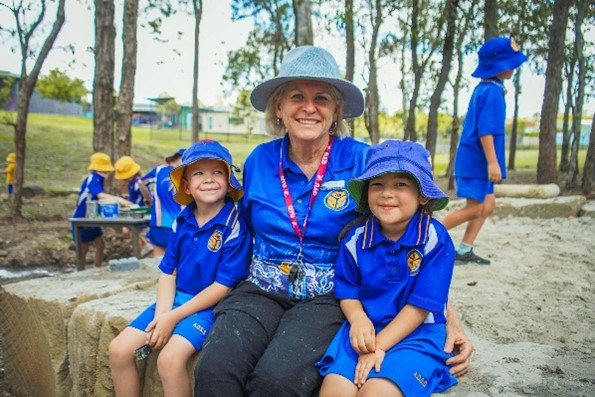
If you’ve spent more than five minutes in a school, you’ve probably noticed something: learning and play often get boxed into two very different corners. Learning happens in the classroom. Play happens… well, when the bell says so — usually on equipment that looks like it was designed to train tiny Olympic gymnasts.
But here’s the twist: the Committee on the Rights of the Child (2013) reminds us that play isn’t just a “nice-to-have.” It’s essential. The World Health Organisation backs this up, pointing out that mental health challenges often show up early in life.
And psychologist Peter Gray takes it even further. In The Decline of Play and the Rise of Psychopathology in Children and Adolescents, he suggests that as children’s opportunities for free play have dropped, rates of anxiety and depression have climbed. According to Gray, play gives children something we can’t replicate with worksheets: a deep sense of personal control.
A School Story: What We Noticed at Amberley District State School
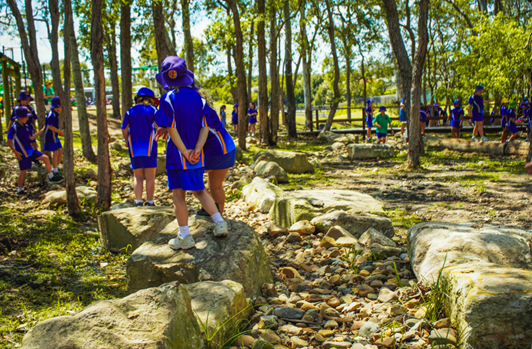
When Amberley District State School relocated in 2010 to an urban site, one patch of natural bushland was left untouched — a quiet, leafy section tucked away from classrooms.
And something interesting happened…
Children who struggled with everyday classroom routine found themselves gravitating toward this untouched corner. They were drawn there — pulled, really — to a place where they could breathe, explore, reset, and just be. Many of these children experience complex needs that can weigh heavily on their mental health. Yet in this natural pocket, they found calm through the kind of play that’s freely chosen, self-directed, and utterly theirs.
Supporting the Pull: Growing Urimbirra
The school recognised the magic in this space and began nurturing it. The natural area, known as Urimbirra, has gained a few thoughtful additions:
• A bridge and boardwalk to invite kids in from multiple directions and allow for accessibility for all
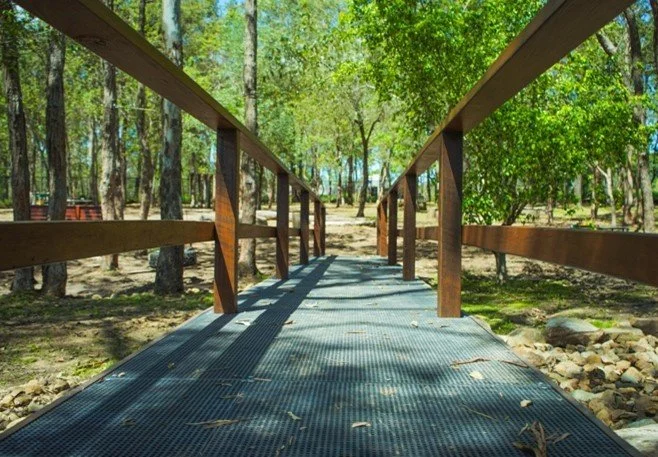
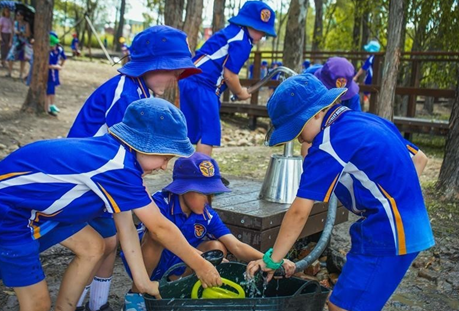
• Digging patches and mud kitchens (because mud is basically childhood’s love language)
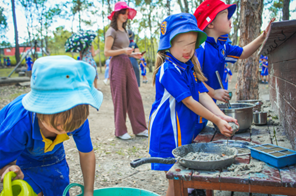
• Big and small loose parts for imagination, construction and everything in between
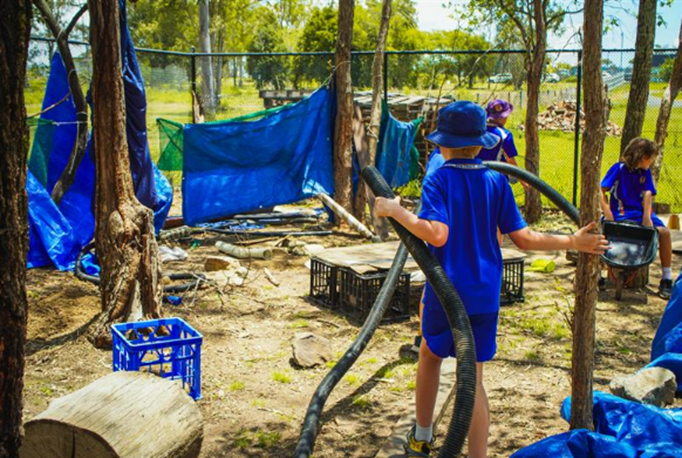
And so, the space became more than a “play area.” It became a place where kids practise the stuff that actually makes learning possible: regulating emotions, building confidence, testing ideas, solving problems, taking safe risks, and discovering that they are capable — all without judgment or timers.
Play gives them a foundation to support and connect with curriculum.
A Community of Play
Urimbirra’s influence is reaching all children in the school. A place to share culture and connect together found when the space was renewed and reopened.
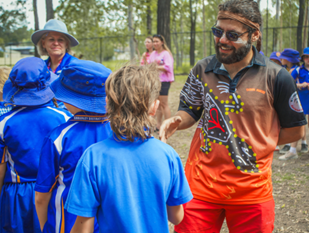
A place for families and Outside School Hours Care to connect with the play culture, creating a shared understanding that play isn’t an “extra” — it’s a community value.
The name Urimbirra means “A place to take care of.”
And it has become exactly that — a place taking care of all of us.
Written by Barb Christie