
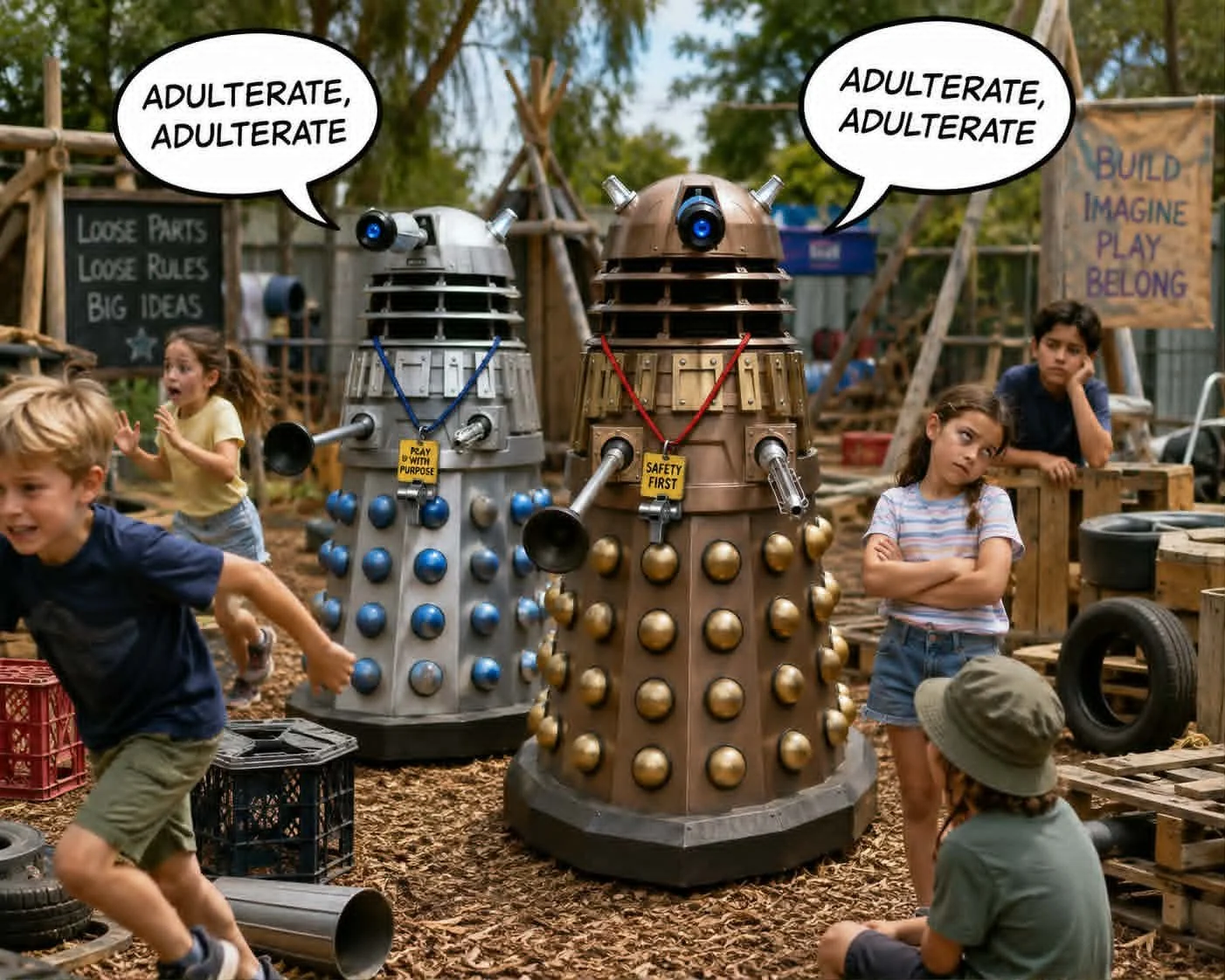
There is a particular temptation that comes with working with children: when we see play happening, we want to make it better. We add a suggestion. We introduce a resource. We ask a question. We encourage a particular direction. We establish a learning outcome. We see an opportunity for literacy, numeracy, physical development, social skills or creativity. And sometimes, in doing so, we accidentally change the thing we were trying to support.
This can be described as adulteration of play: the negative impact of adult intervention on children's play frames.
The important word here is negative. Adult intervention is not inherently bad. Adults have important roles in creating environments, maintaining safety, supporting inclusion and sometimes entering children's play by cue or explicit invitation. But intervention can alter the meaning, direction and emotional experience of play in ways that serve the adult's agenda more than the child's.
The play cycle and the fragile nature of play
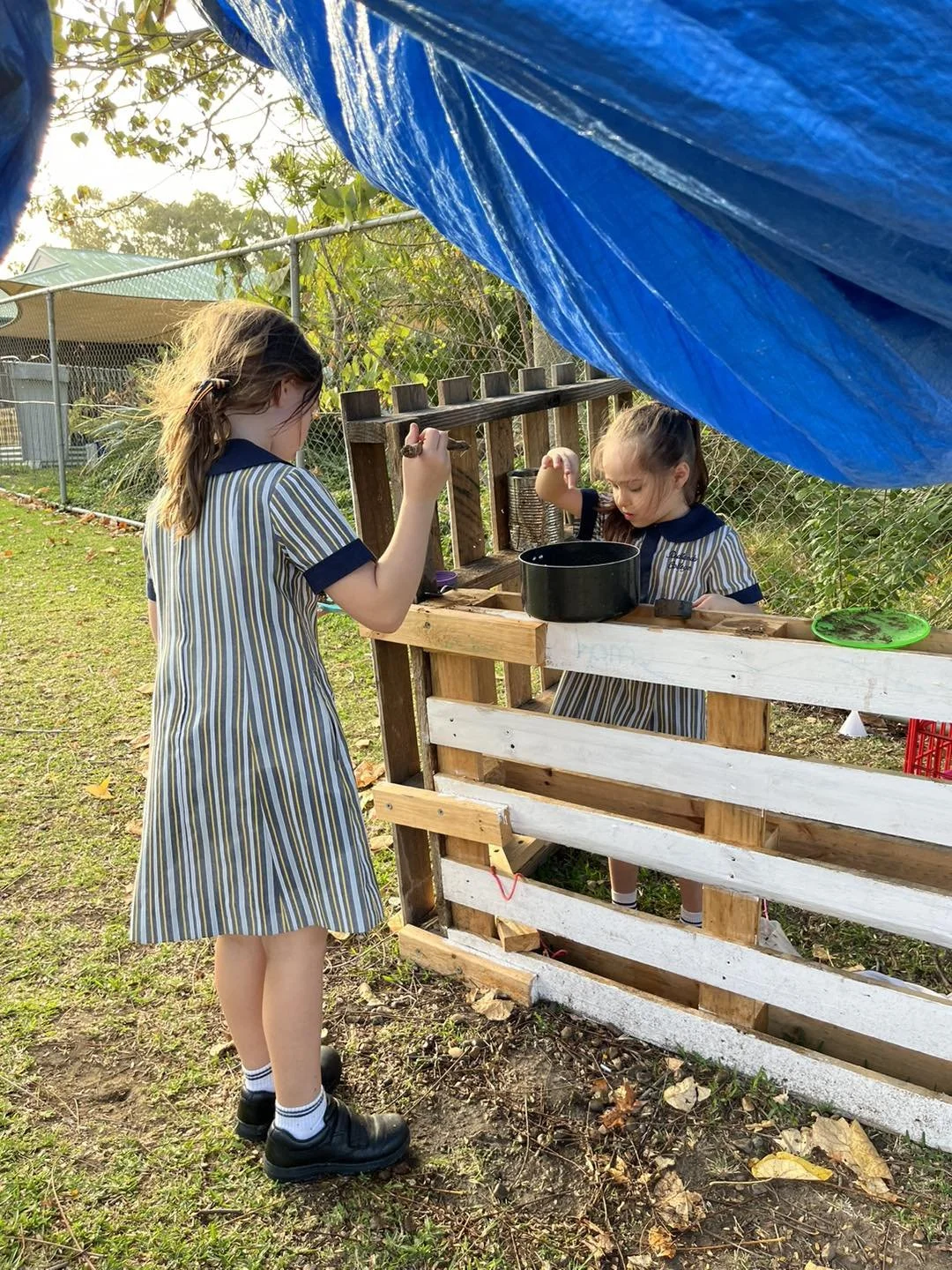
Playwork theory, courtesy of Gordon Sturrock and Perry Else, gives us a useful way of thinking about this through the play cycle. Children encounter something in their environment that catches their attention: a loose part, a space, another child, an idea, a sound or an object. This can become a play cue. The cue is recognised and responded to, and a play frame begins to develop. Within that frame, children establish their own meanings, rules, relationships and possibilities. The play cycle is not necessarily linear or predictable. It develops through a continuous exchange between the child, other players and the environment.
This is one reason adult intervention can be so powerful.
An adult entering the play frame brings a different set of meanings. They bring authority, expectations, experience, knowledge and often an intended outcome. Even when the adult's intention is positive, their presence can change the conditions of the play.
A pile of sticks might become a spaceship.
A cardboard box might become a jail.
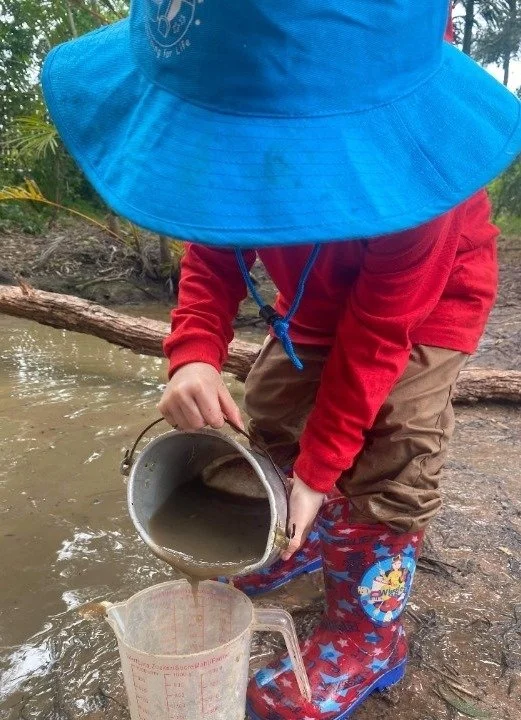
A muddy puddle might become an ocean.
But when an adult says, "Why don't you make a boat and use these materials to learn about buoyancy?", the play frame has potentially shifted. The child may still be playing. But whose play is it now?
The wisdom of not knowing
This is where John Keats' idea of negative capability offers an interesting philosophical connection to playwork.
Keats described negative capability as the ability to remain in "uncertainties, mysteries, doubts, without any irritable reaching after fact and reason."
Play often requires exactly this capacity. We don't always need to know where the play is going. We don't need to resolve the narrative. We don't need to identify the learning outcome. We don't even necessarily need to understand what the child is doing. There is something deeply uncomfortable for adults about watching children engage in apparently purposeless activity. We are accustomed to measuring progress and identifying outcomes. We are trained to ask, What is the point? But perhaps the point of play is sometimes precisely that it doesn't have a point that we can articulate. The child may be exploring, experimenting, rehearsing, imagining, relating, testing, failing, succeeding or simply experiencing the moment.
The journey may be the experience.
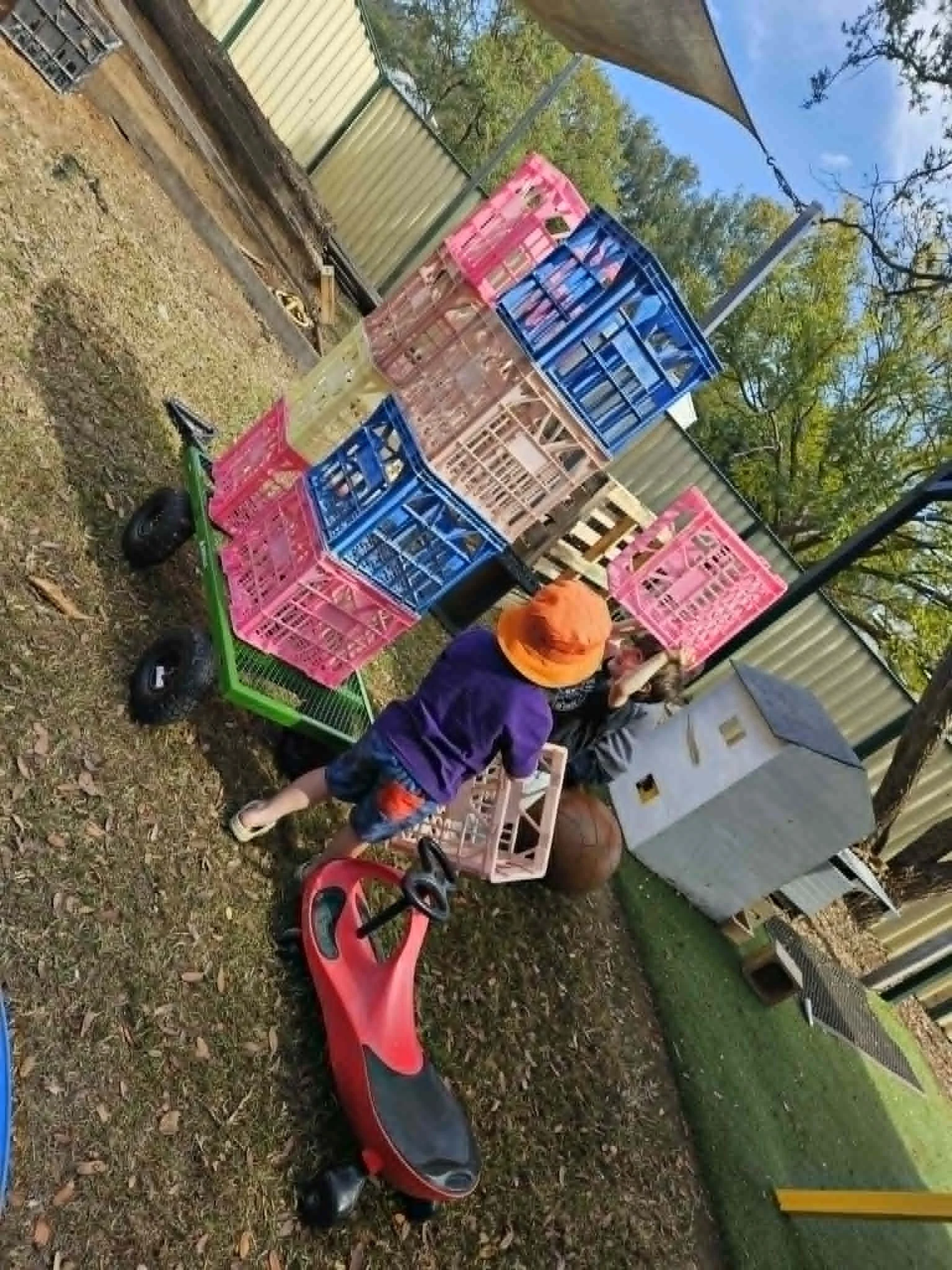
In the frame above, the children were transporting crates to the other side of the yard to build a fort. To the subjective mind the play frame thus seemed to be about the fort and a well-meaning adult may have intervened to make the fort “better” in some subjective way. However, once all of the crates had been moved, the play frame annihilated itself. The frame had been centered in the transporting, the process, not the fort, the outcome.
When the outcome becomes more important than the experience
Adulteration frequently occurs when adults become attached to an outcome. We might want the children to:
develop a particular skill;
learn something;
produce something;
behave in a particular way;
demonstrate a learning outcome;
use the resources "correctly";
participate in an activity;
reach a predetermined conclusion.
None of these intentions are necessarily wrong. The problem occurs when the adult's subjective agenda begins to dominate the child's play. A child building a complicated structure may not be trying to build a structure. They may be exploring destruction, balance, collaboration, frustration, persistence or simply enjoying the physical sensation of moving objects around. If we intervene to make the structure bigger, better or more aesthetically pleasing, we may be improving the product while diminishing the experience.
This is one of the great tensions in playwork.
Adults tend to value what play produces. Children often value what happens while they are playing.
Tempering adulteration
The answer isn't to create a world where adults never intervene. That would be neither realistic nor desirable. Instead, we can become more thoughtful about when, why and how we intervene. One useful approach is dynamic risk-benefit assessment. Rather than asking only, "What could go wrong?", we can ask:
What is the child gaining from this experience, and what might be lost if I stop it?
Risk is not simply a hazard to be eliminated. Sometimes the risk, uncertainty or challenge is part of what makes the play meaningful. The second consideration is the style of intervention.
A useful continuum introduced in Sturrock & Else’s “Colorado Paper” is:
Play maintenance – the adult supports the existing play without attempting to change its direction.
Simple intervention – a small, responsive intervention that helps sustain or extend the play.
Medial intervention – the adult becomes more actively involved within the play frame while still responding to the children's intentions.
Complex intervention – a more substantial intervention that may involve deliberately entering, shaping or influencing the play.
The further we move along this continuum, the greater the potential for our own agenda to influence the play frame. That doesn't make complex intervention wrong. It simply means it deserves greater affective consideration, and reflection.
Before intervening, perhaps we should ask:
Am I responding to a play cue, or am I introducing my own agenda?
Am I supporting this play, or redirecting it?
Is there a genuine need for me to intervene?
What might the children gain from my intervention?
What might they lose?
And perhaps most importantly:
Whose experience am I trying to improve?
The discipline of restraint
There is a strange paradox in playwork.
Sometimes the most skilled intervention is no intervention at all.
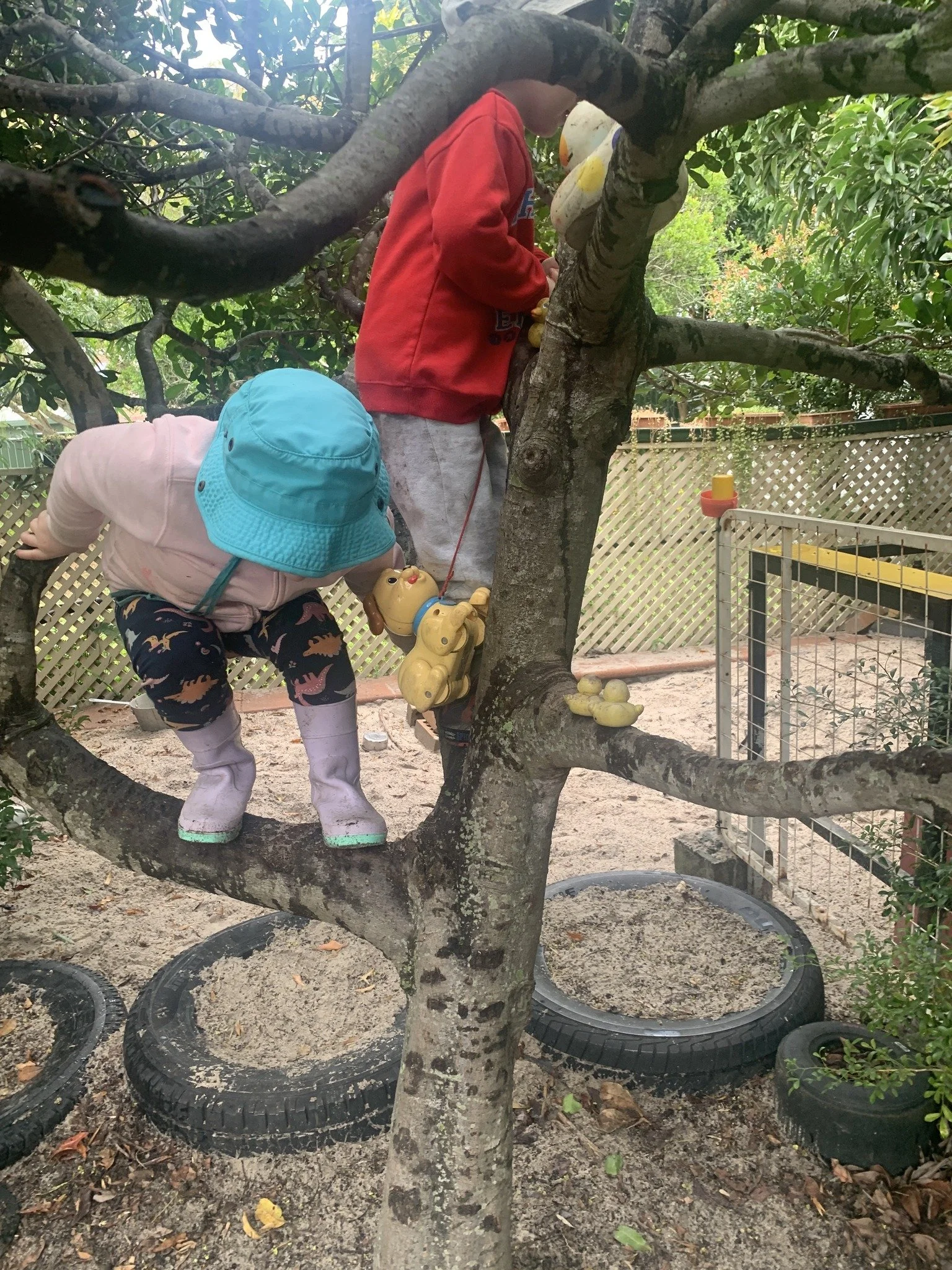
It takes considerable professional confidence to stand back when children are deeply engaged in something that we don't fully understand. It takes restraint not to correct, improve, teach, organise or redirect. This is where negative capability becomes particularly valuable. We can tolerate uncertainty. We can allow the play cycle to develop. We can trust children to construct meaning. We can resist the urge to turn every moment into an opportunity for an adult-defined outcome. And we can recognise that play doesn't necessarily need our explanation in order to have value. At the end of the day, it comes down to having faith in the play process. Of course, there are times when intervention is necessary. Safety, inclusion, safeguarding, significant distress, conflict and the responsibilities of the adult role can all require us to act.
But even then, it is worth checking ourselves.
Why am I intervening?
What am I hoping to achieve?
Whose agenda does this serve?
And perhaps finally:
What will this intervention cost the play?
The goal isn't to eliminate adult intervention. It is to make intervention intentional, proportionate and respectful of the play frame. Because sometimes the greatest gift an adult can give a child at play is not another idea, another question or another outcome. Sometimes it is simply the freedom to keep playing.